I love letter to Odetta and the new generation of Black folk.
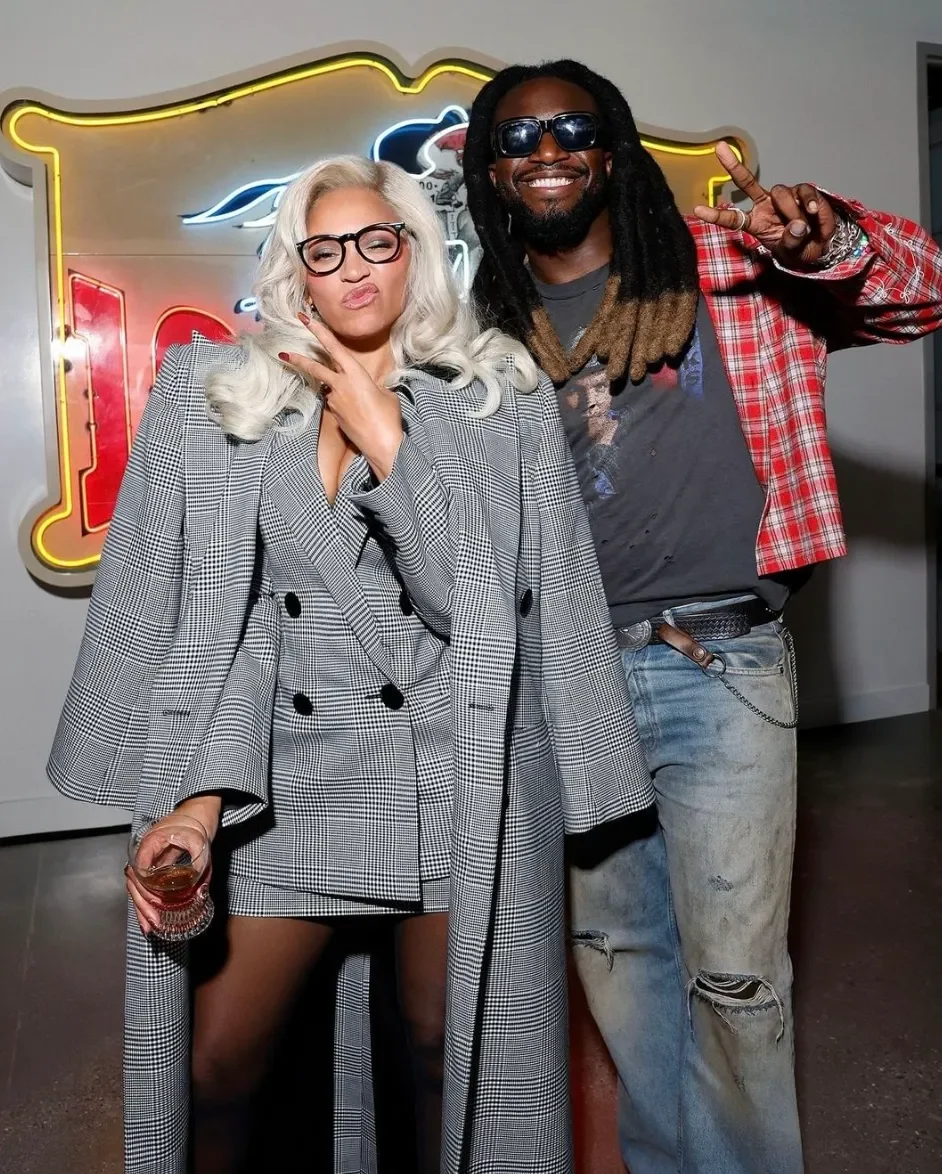
Beyonce and Shaboozey after the release of Cowboy Carter
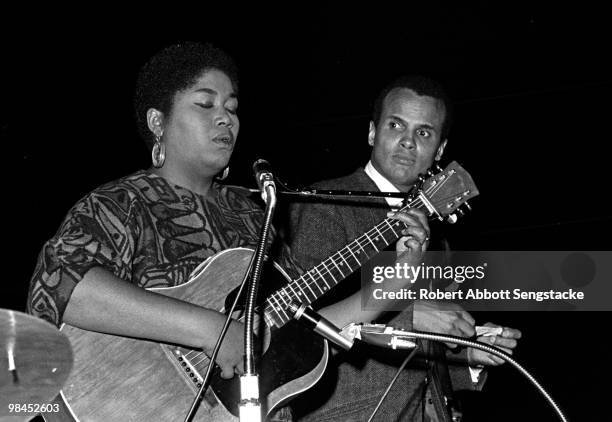
Odetta with Harry Belafonte
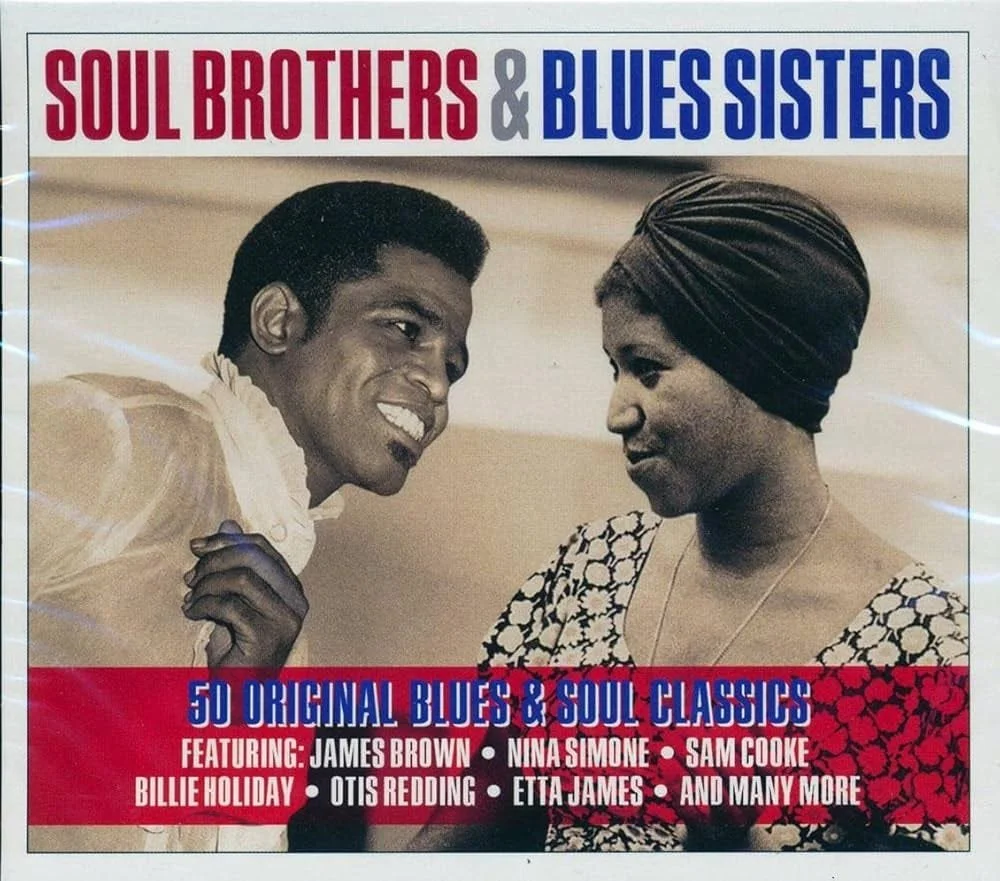
Not Now Music, a UK re-issues label, release.
66 weeks after its release, Shaboozey, “A Bar Song (Tipsy)” remains in the top 10 on the Billboard Top 100.
This makes him unique to the chart as the majority of Billboard Top 100 songs are less than a year old. But, he also belongs to an elite group of artists, hand selected by her majesty Beyoncé Giselle Knowles-Carter to be featured on her genre-defying country album, Cowboy Carter.
Cowboy Carter was released on March 29, 2024. It's notable as a Beyoncé album, intentionally Americana, and features Black country, folk, and Americana artists who were known but made more notable by the collaboration.
Of all the Black artists featured on the album, Shaboozey is having the greatest success, no question about it. While it’s clear he is talented, successful and Black - I do wonder if he will be remembered as a Black artist that, like Beyonce, finally reclaimed country music as a multi-racial American art form. Or, will he fade from Black culture the way Odetta did. Before I go there, let me start with how I found Odetta.
What Black Music Is
I learned what Black music is from my Black parents. They grew up in segregated cities, Detroit and Queens respectively, in a time when segregated “race” radio stations were still common, although not always called out in that way. From them, I learned that Black music has always been central to Black life. My mother would clean on weekends, swaying and sweeping to everything from Anita Baker to Zapp. She was my introduction to Hip-Hop as she is a huge Salt-N-Pepa and Mary J Blige fan — giving me a bias towards rap centered around women to this day. My father, a drummer at our church, made sure we knew the foundations of Black music; gospel, blues and jazz; but could have fun with the avant-garde. We often explored Parliament-Funkadelic's Mothership and, behind his back, I would venture to Prince’s Erotic City. I knew from an early age that Black music was expansive and vibrant — a pool that could be shallow at one step and yet, reach depths beyond what I could comprehend in the next. I learned that Black music is, for and by Black folks.
However, being young and growing up on an Air Force base in Omaha, Nebraska — the world around me sounded very different from the world my parents worked to maintain in our home. This world was filled with white music. The opposite of everything I was fed at home and that alone made it rare and novel. I was especially drawn to the pop/folk moment we had in the late 90s with Counting Crows, Blues Traveler, Lisa Loeb — all were hugely popular, moody, and very white. It wasn’t until I was introduced to Tracy Chapman that I even knew folk music could be Black.
What Black Music Is Not
It was the 1996 GRAMMYs and Tracy was performing her hit record “Give Me One Reason” with Eric Clapton — it would go on to sweep all the major categories of the night along with her album New Beginning. She was dark, sultry, very clearly Black and yet folky. What I was seeing in Tracy Chapman was a Black artist that was happy dancing on the lines in both Black and white worlds, forcing the world to draw new ones. She wasn’t Black music enough for Black folks nor was she white music enough to be simply labeled folk music. To this day, my parents don’t play Tracy Chapman but her appearance unlocked something for me and I looked for more folk of color to engulf. Artists like Labi Siffre, Joan Armatrading, Macy Gray, Meshell Ndegeocello, Hootie and the Blowfish, Eagle Eye Cherry, Amos Lee, and so on.
It’s not hard to hear how a folk song builds on gospel, blues, rock music and I hope we have at the very least established that those three Black music genres, created by American Blackness, are the building blocks of modern music. What I couldn’t make sense of was why it was so hard to recall a Black Folk artist that parallels Bob Dylan or Joni Michell? Especially once I was smacked in the face by the vocals of Odetta.
Folk’s most popular moment (open to argument) came in the 60s during a highly politically charged moment in American history and American music. At this time singers like Bob Dylan and Joan Baez were the voice of a white progressive collective. So you would imagine if Bob Dylan was a fan of someone, the world would be too. Bob Dylan once said that it was hearing Odetta for the first time that turned him onto folk singing, and yet.
What Is Odetta
For Black Americans, to this day, Martin Luther King is closer to mythology than person — he keeps a watchful eye over many grandmothers’ living rooms. Odetta sang alongside him at the March on Washington; he referred to her as The Queen of American Folk Music. It’s hard to overstate how important and influential Odetta’s voice was to folk music during its most important and influential years.
Odetta never fit neatly into the Black musical genres of her day. She grew up in Alabama but moved to California where she studies Opera. Her powerful voice was used to bring spirituals, hymns and bluegrass to life far from the Delta. Songs like 'Hit or Miss' speak to her ability to use Americana as civil rights music. At the same time, her singing 'I'm On My Way,' a traditional gospel song, could find an audience at Dr. Martin Luther King's March on Washington.
So why isn’t Odetta next to Dylan and Joni on the folk Music Rushmore? We often look back over this time as one unified fight against racism and war. Good white people and peaceful Black people came together to fix America. And to keep that story intact we just smooth over how divided we were in our search for progress.
Genres are a funny little thing.
Long before Odetta sang on the Mall, music in America was being segregated with intention and discipline. Country, or at the time Hillbilly Music was being manufactured like Kraft cheese singles, and sold to white Americans as “their” music. And while it’s easy to see how this music was never neatly white, nor was it neatly country, marketing is going to do what it always does and simplify the complex for the purposes of consuming.
And by the 60s, Folk music was white, Soul music was Black. To be a Black Folk artist not only meant that you were going to a place you weren’t welcome but you were abandoning a home you were supposed to be grateful to have at all.
Not Now Music, a UK re-issues label, release.
Black people have told ourselves Blackness is at its best when it’s free to imagine a past exclusive of white music — what does it mean to us if we acknowledge that we left some of our greatest voices behind to tell an uncompromising version of our own history? Perhaps it’s too hard to look back and unlearn what folk is, for Black folks just as much as it is for white folks.
I say all this to say, music is personal. Like so many things that reflect our taste - the music we like has everything to do with our culture. And the labels we give music, the artists we assign to theses labels matter.
So I hope the current trend sticks. As someone who loves folk music, the sound and the label, I hope we continue to see artists like Jensen McRae continue to make folk music that is unapologetically Black. I hope Tanner Adell never has to cross over to R&B to be remembered. I hope Shaboozey brings Tracy Chapman to Stagecoach next year and no one bats an eye.The sobering reality is less than 2% of all popular music is produced by women. Nope that’s not a typo, two percent. But The Recording Academy is making strides to change that. Starting with the inclusion initiative #WomenInTheMix. Created over a year ago, it was launched to focus on getting more women into producing and engineering roles within the music industry.
To bring awareness to #WomenInTheMix, we knew we needed to leverage the transformative power of music. So in a simple, stripped down film, a fifty woman-strong, all-female choir performs a choral arrangement of Alicia Key’s single “Underdog.” One by one they sit down and stop singing until only 2% — one woman — remains. Like the song, our film is dedicated to people working for a better life, doing what they love. And that really touched me.
Strategy can often feel like a discipline dominated by men. In fact, advertising as a whole is a very white male space to work in. So as a Black woman and a mom, it’s not very often that I get to see myself in the work I do. But this project inspired me. From the story we told to the way we told it — we really brought a multi-generation and color representation of womanhood to life. We didn’t do that on our own, we made a point to bring the amazing Mollie Mills on to direct and supported her with other women in key roles like editors, musical arrangers, producers and account leads. We also brought together a choir of women that truly represented a diverse cohort of powerful female voices.
Together this amazing group of women helped create a piece of work that will at least keep me inspired and fighting to do what I love— for myself and my daughters.
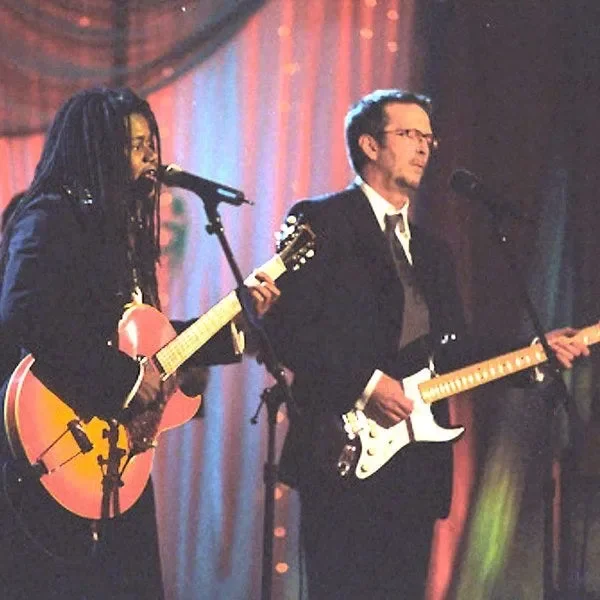
Tracy Chapman and Eric Clapton Grammy Performance